Website vs Web Application: What’s the Difference?
Website vs Web Application: What’s the Difference?
When planning a new digital project, one of the first questions you may have is: Website vs. Web Application — what’s the difference?
Although websites and web applications both run through a web browser, they are designed for different purposes. Understanding the difference can help you choose the right solution for your business.


What Is a Website?
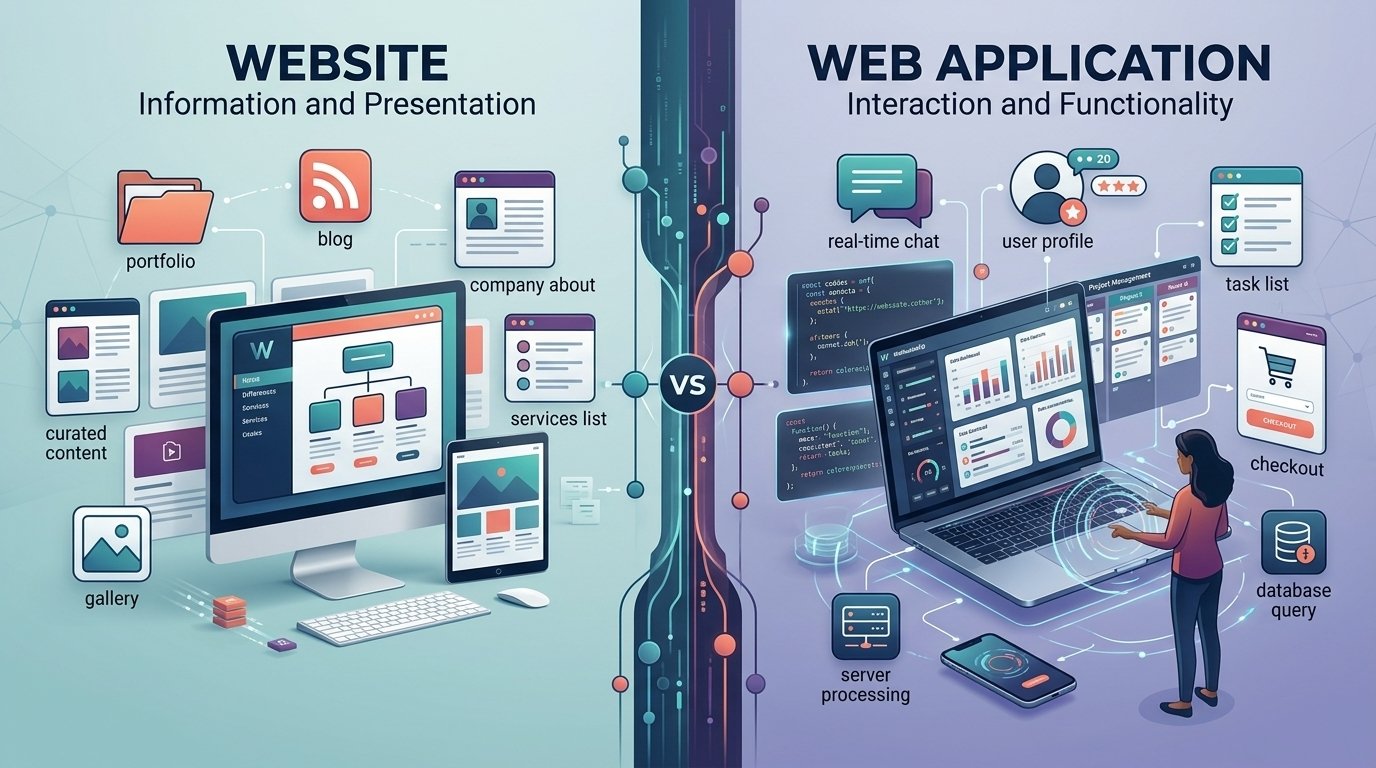
A website is primarily designed to provide information or content to visitors.
Examples include:
- Business websites
- Portfolio websites
- Blogs
- News websites
- Restaurant websites
- Company websites
- Informational websites
Visitors typically browse pages and consume information rather than performing complex tasks.
For example, a business website may include:
Home → About → Services → Portfolio → Blog → Contact
The main goal is usually to inform visitors, build trust, and generate inquiries or sales.
What Is a Web Application?
A web application is a website that allows users to interact with data, tools, or business processes.
Instead of simply reading information, users can perform actions within the application.
Examples include:
- Online banking systems
- Customer portals
- Booking systems
- Project management tools
- Online marketplaces
- Employee dashboards
- CRM systems
- Inventory management systems
For example, an online booking application may allow a user to:
Create an account → Select a service → Choose a date → Make a payment → Manage the booking
This requires considerably more functionality than a standard informational website.

Website vs Web Application: Key Differences
| Website | Web Application |
|---|---|
| Mainly provides information | Designed for user interaction |
| Usually simpler functionality | More complex functionality |
| Visitors browse content | Users perform tasks |
| Often public-facing | May require user accounts |
| Usually easier to develop | Requires more development |
| Examples: blogs, company sites | Examples: dashboards, booking systems |
When Do You Need a Website?
A traditional website is usually the right choice if your primary goal is to:
- Promote your business
- Showcase your services
- Display your portfolio
- Publish articles
- Provide company information
- Generate leads and inquiries
For many small and medium-sized businesses, a professionally developed website is all they need.
When Do You Need a Web Application?
A web application may be more appropriate when your business needs users to interact with your system or data.
You may need a web application if you want to:
- Create customer accounts
- Manage bookings
- Process complex orders
- Build a customer dashboard
- Manage inventory
- Automate business processes
- Connect multiple systems through APIs
- Provide different functionality to different users
In these situations, simply adding more plugins to a traditional website may not always be the best long-term solution.
Can a Website and Web Application Work Together?
Yes. Many businesses use both.
For example:
Public Website
Visitors can learn about your company, services, pricing, and contact information.
Web Application
Registered customers can log in to manage orders, bookings, invoices, or account information.
This approach allows a business to have a professional public presence while providing advanced functionality to customers or employees.

You Also Might Like